
From the front lines of leadership
These articles reflect the questions leaders are asking right now—about influence, change, trust, communication, and what it really takes to lead well in today’s workplace.
As a regular Forbes Coaches Council contributor to Forbes, I write at the intersection of research, real-world leadership challenges, and what I see every day in my work with executives and teams. Each piece is designed to offer practical insight you can apply immediately—whether you’re navigating complexity, developing leaders, or strengthening how people work together.
This page brings my Forbes articles together in one place so you can explore the ideas most relevant to your role, your team, and your organization.
If an article resonates, it often connects directly to the workshops, assessments, and leadership work we do with clients.

17 Unexpected Habits That Make Leaders More Effective
Between constant change, the rapid adoption of AI and a steady stream of competing priorities, leaders face more distractions than ever. Staying focused and effective in this environment often takes more than a well-organized calendar or the latest productivity tool. In fact, some of the most useful habits involve slowing down, creating space to think and intentionally doing less.
How To Help Alleviate Workplace Loneliness As A Leader
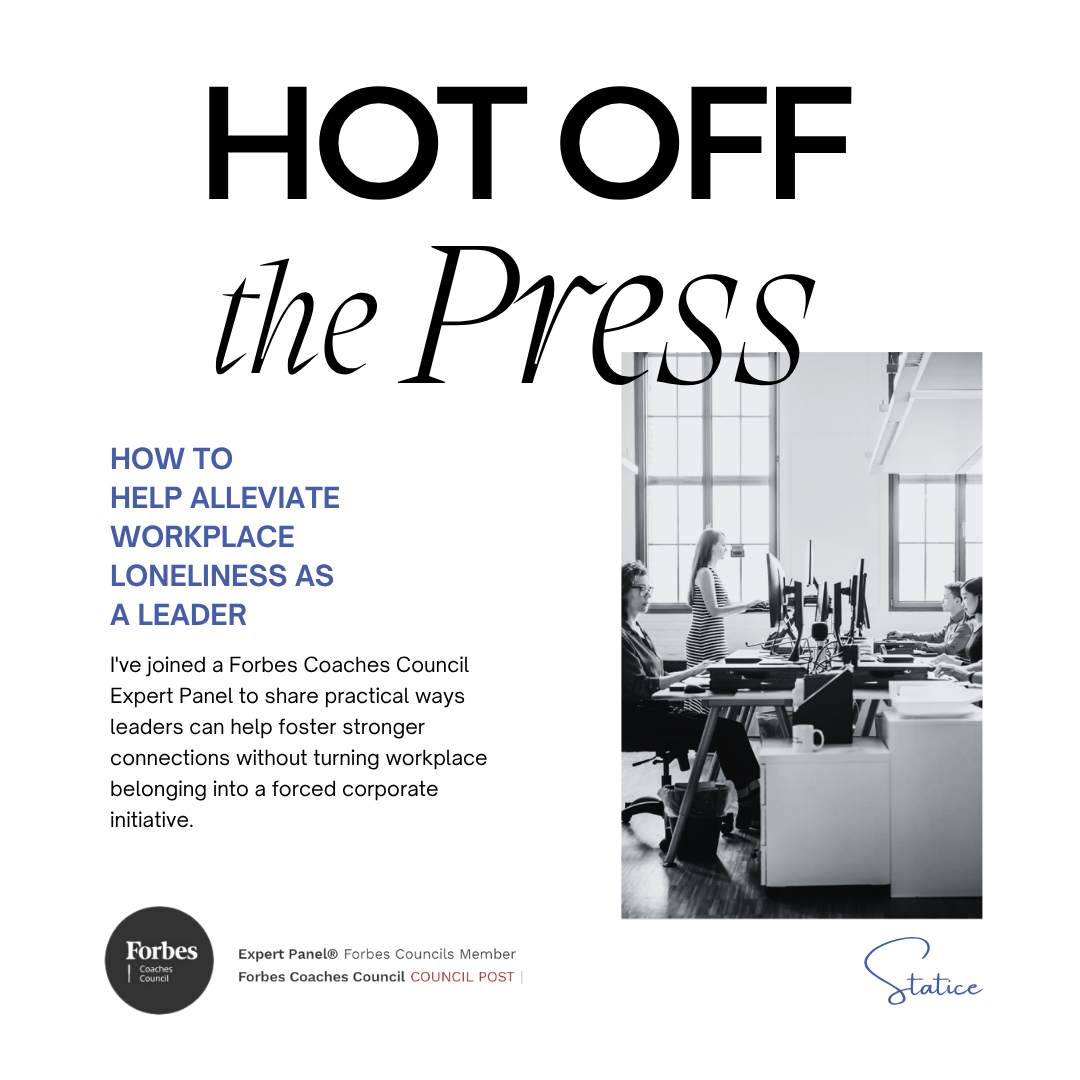
Bringing employees back into the office has not automatically restored a sense of connection, as many organizations expected. Workplace loneliness is not simply about employees being physically disconnected; it reflects whether they feel included and have meaningful relationships and opportunities to contribute.
How To Help Coaching Clients See The Patterns Holding Them Back
For coaches, it’s not uncommon to notice recurring problematic behaviors in clients long before they recognize it themselves. The challenge is to lead a client into those same observations as collaborative insights without making them feel defensive, judged or admonished for unknowingly doing something “wrong.”

Coaches Reflect: When Their Work's Value Became More Than Theory
While measuring clients’ progress through goals, metrics and milestones is a big part of a coach’s job, some of the clearest reminders of their work’s value may come from real-life experiences that can't be captured on a spreadsheet. Facilitating a breakthrough, having an unexpectedly eye-opening conversation or witnessing the long-term effects of one’s guidance can reshape how a coach thinks about their purpose and impact, shifting the experience from merely theoretical to something unmistakably real—and powerful.

Feeling Unhappy at Work? Treat It as Data.
Most professionals experience periods of dissatisfaction at work at some point in their careers. While the cause of their unhappiness is sometimes tied to an obvious conflict or circumstance, it can also emerge as a lingering sense that something simply isn't working.

How To Overcome Common Challenges Of Solopreneurship: Lessons Learned
Ask almost any solopreneur what surprised them most about running a business alone, and chances are it won’t be the work itself. It’s the constant decision-making, isolation, uncertainty and pressure of being responsible for everything at once.
While solopreneurship offers freedom and flexibility, it also comes with challenges that are easy to underestimate until you're living them. The good news is that many of those obstacles are widely shared and common. Here, members of Forbes Coaches Council reflect on the toughest challenges they've faced as solopreneurs and the lessons that helped them move forward.

The Big Lessons Ignoring Professional Advice Taught These Coaches
Not every piece of professional advice is easy to accept the moment it’s received, especially if it challenges one’s instincts, ambitions or assumptions. Sometimes, the decision to reject or ignore well-intentioned advice leads to growth through further experimentation and deepening conviction. Other times, it later reveals blind spots and obstacles that could have been avoided with a clearer perspective or a little humility.

For job seekers who built their careers before personal branding became a professional expectation, the need to catch up with peers by cultivating an online presence can feel overwhelming. With most recruiters and hiring managers these days turning to LinkedIn not only to verify an applicant’s experience, but also to assess their visibility, credibility and industry engagement, how can a seasoned candidate with no online footprint prove they have what it takes?

How To Manage AI Integration Without The Headache: Leadership Tips
As AI becomes more embedded in day-to-day business operations, many senior leaders are discovering the real challenge isn’t navigating the technology but managing the ripple effects its use has across critical areas like decision-making, accountability and trust-building. As teams move faster with AI than governance can keep up, roles are blurring and leaders are struggling to define where human judgment should still take the lead.

Email Etiquette At Work: Universal Rules For Every Professional
In the workplace, communication methods evolve constantly; new tools and resources come to market every day, but one—email—still strongly shapes first impressions and professional judgments. In 2026, excellent email etiquette is all about being clear, direct and respectful, especially when inboxes are packed with AI-generated noise.

New Executive Leadership Challenges Emerging—And What’s Driving Them
Executive coaching engagements today often look and sound substantially different from those taking place just five years ago. Rapid technological shifts, evolving workplace expectations and ongoing economic uncertainty have introduced new pressures—and amplified existing ones—for leaders at every level, with executives navigating novel challenges like leading hybrid teams, managing constant change and dealing with decision fatigue.

How Great Leaders Flex Their Influencing Styles To Build Alignment
Picture this: You have a strong idea for a project or change, but others on your team aren’t convinced. You present the data and explain the benefits, yet the room stays quiet. The problem may not be your idea. It may be the way you convey the idea—or in other words, your influencing style.

How To Intentionally Design The Best Learning Environment For Teams
Genuine organizational learning doesn’t occur just because smart people gather in a room together or because HR scheduled a training session. It happens when leaders decide how reflection, feedback and experimentation are going to show up in the rhythm of daily work.

How To Turn CEO Communications Into Meaningful Employee Engagement
If a CEO communicates often through regular town halls, emails and company updates yet employees still feel disconnected from the organization’s purpose and priorities, the issue may be about substance and strategy, not just frequency. To create true clarity and two-way dialogue, leaders must rethink when, where, how and why they communicate with their teams.

How To Read Employees’ Anxiety As Data, Not Resistance To Change
During periods of change, leaders often look at hesitation or concern on the part of worried teams as resistance. In reality, it can indicate that something about the way the change is being managed feels unclear or risky to employees. In these instances, well-intentioned efforts to evolve organizationally can stall if leaders move to manage or stifle employees’ reactions rather than trying to understand them.

How To Overcome Common Public Speaking Challenges: Coaching Insights
Many leadership coaching clients think the biggest challenges facing them in becoming a compelling public speaker include polishing their presence or perfecting their slide deck. The real obstacles usually reside somewhere less visible. Unclear thinking, message overload and fear of judgment can quietly undermine even the most experienced executives when it’s time to present to an audience.

Small Leadership Behaviors That Can Negatively Impact Company Culture
In this Forbes Coaches Council expert panel, leaders explore how small, everyday behaviors can unintentionally shape—or erode—company culture. While these moments may seem insignificant on their own, patterns of behavior can quietly undermine trust, engagement, and psychological safety over time.

How To Avoid The Most Common Mistakes Coaches See Their Clients Make
Even the most competent and ambitious professionals stumble when trying to navigate their own personal growth, career transitions and leadership challenges. Often, progress stalls not because of a lack of effort or talent, but because they’ve yet to identify problematic recurring patterns.

Big Challenges For Executives When Middle Management Is Eliminated
Many large organizations are removing layers of middle management in an effort to operate leaner, faster and with fewer bureaucratic barriers. However, while flatter organizational structures can increase efficiency, they also introduce new pressure points—especially when fewer leaders oversee larger teams. Communication gaps, decision-making bottlenecks, increasing risk of burnout and loss of mentorship are just a few challenges companies may face without that critical layer of support.

4 Emerging Trends That Make It Clear: You Can’t Manage Like You Did 10 Years Ago
Today’s workplace looks nothing like it did a decade ago. Four trends are reshaping how people work, what they expect from leaders and what it takes to keep teams aligned: multigenerational workforces, rapid advances in technology, flatter hierarchies and ongoing environmental shifts. Together, they send a clear message: Stop managing like you did 10 years ago. Approaches that worked in 2015 can now create friction, disengagement or misalignment.